Anxiety is one of the most common mental health conditions worldwide. But not all anxiety looks the same.
Some people constantly worry about everyday life, even when nothing seems wrong. Others feel intense fear only in social situations, like speaking in public, meeting new people, or being watched by others.
This is where many people get confused between generalized anxiety disorder (GAD) and social anxiety disorder (SAD).
While both involve anxiety, fear, and emotional distress, they affect people in very different ways.
Understanding the difference between generalized anxiety vs social anxiety can help you recognize symptoms earlier, seek proper support, and choose the right treatment approach.
Table of Contents
- What Is Generalized Anxiety Disorder?
- What Is Social Anxiety Disorder?
- Generalized Anxiety vs Social Anxiety: Main Differences
- Symptoms Comparison
- Causes and Risk Factors
- How Diagnosis Works
- Treatment Options
- Can You Have Both Disorders?
- When to Seek Professional Help
- FAQs
- Conclusion
What Is Generalized Anxiety Disorder?
Generalized Anxiety Disorder (GAD) is a mental health condition characterized by persistent and excessive worry about multiple areas of life.
People with GAD often feel anxious about:
- Work
- Health
- Finances
- Family
- Relationships
- Daily responsibilities
- Future events
The worry is usually difficult to control and may continue even when there is no immediate threat.
Unlike short-term stress, generalized anxiety tends to feel constant and overwhelming.
Common Symptoms of Generalized Anxiety Disorder
People with GAD may experience:
- Constant overthinking
- Restlessness
- Muscle tension
- Trouble sleeping
- Fatigue
- Difficulty concentrating
- Irritability
- Feeling “on edge”
Many individuals describe it as feeling mentally exhausted all the time.
What Is Social Anxiety Disorder?
Social Anxiety Disorder, also called social phobia, involves an intense fear of social situations where a person may feel judged, embarrassed, criticized, or rejected.
The anxiety is specifically linked to social interaction or performance situations.
People with social anxiety often fear:
- Public speaking
- Meeting new people
- Group conversations
- Eating in public
- Attending social gatherings
- Being observed by others
- Interviews or presentations
This fear can become so intense that people begin avoiding social situations completely.
Common Symptoms of Social Anxiety
Symptoms may include:
- Fear of embarrassment
- Blushing
- Sweating
- Shaking
- Rapid heartbeat
- Avoiding eye contact
- Nausea
- Panic before social events
- Avoiding conversations or gatherings
In severe cases, social anxiety can affect school, work, relationships, and daily functioning.
Generalized Anxiety vs Social Anxiety: Main Differences
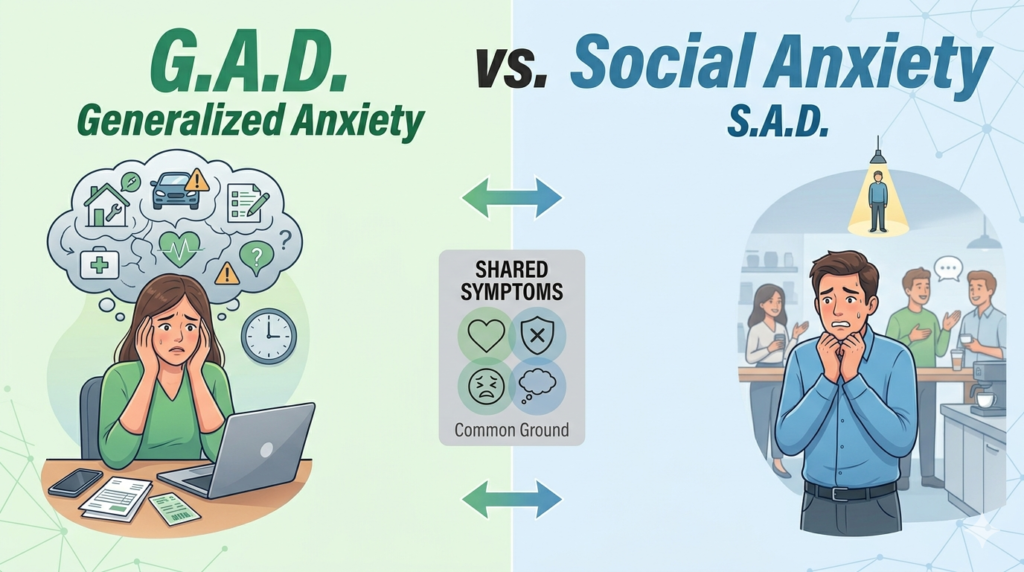
Although both conditions involve anxiety, the source and pattern of fear are different.
| Feature | Generalized Anxiety Disorder | Social Anxiety Disorder |
|---|---|---|
| Main Fear | Everyday life worries | Fear of social judgment |
| Anxiety Trigger | Multiple life situations | Social or performance situations |
| Worry Pattern | Constant and broad | Situation-specific |
| Physical Symptoms | Tension, fatigue, insomnia | Sweating, blushing, trembling |
| Avoidance Behavior | Less common | Very common |
| Impact | Daily stress and overthinking | Social isolation and avoidance |
Quick Summary
- GAD = ongoing worry about life
- Social anxiety = fear of being judged by people
This is one of the simplest ways to understand the difference.
Symptoms Comparison
Symptoms More Common in Generalized Anxiety Disorder
Excessive Worry
People with GAD often worry excessively about situations that others may consider manageable or minor.
Difficulty Relaxing
Even during calm moments, the brain remains in “alert mode.”
Sleep Problems
Many individuals struggle with insomnia or restless sleep due to racing thoughts.
Physical Tension
Headaches, jaw clenching, muscle pain, and fatigue are common.
Symptoms More Common in Social Anxiety Disorder
Fear of Embarrassment
The fear of saying or doing something “wrong” becomes overwhelming.
Avoidance of Social Situations
People may cancel plans, avoid meetings, or stay silent during conversations.
Panic During Interaction
Some experience panic attacks before presentations, interviews, or gatherings.
Low Self-Confidence
Social anxiety often affects self-esteem and confidence over time.
Causes and Risk Factors
Mental health conditions are complex, and anxiety disorders usually develop from a combination of factors.
Genetics
Anxiety disorders can run in families.
People with a family history of anxiety or mood disorders may have a higher risk.
Brain Chemistry
Imbalances involving neurotransmitters like serotonin and dopamine may contribute to anxiety symptoms.
Childhood Experiences
Trauma, bullying, neglect, criticism, or unstable environments can increase vulnerability.
Personality Traits
People who are highly sensitive, perfectionistic, or naturally shy may be more likely to develop anxiety disorders.
Stressful Life Events
Major changes, financial pressure, work stress, relationship conflict, or academic stress can worsen symptoms.
How Diagnosis Works
A licensed mental health professional evaluates symptoms, emotional patterns, duration, and daily functioning.
Diagnosis usually involves:
- Clinical interviews
- Symptom assessments
- Mental health history
- Screening questionnaires
According to modern diagnostic guidelines, symptoms must typically interfere with daily life and persist over time to meet criteria for an anxiety disorder.
Self-diagnosis through social media or online quizzes is not always accurate.
Treatment Options for Anxiety Disorders
Both generalized anxiety disorder and social anxiety disorder are treatable.
Treatment often depends on symptom severity, lifestyle impact, and individual needs.
Therapy
Professional online anxiety therapy and counseling services
Therapy is considered one of the most effective treatments for anxiety disorders.
Cognitive Behavioral Therapy (CBT)
Cognitive Behavioral Therapy for generalized anxiety and social anxiety
CBT helps people identify unhealthy thought patterns and develop healthier coping strategies.
It is widely recommended for both GAD and social anxiety.
Exposure Therapy
Exposure-based therapy techniques for social anxiety disorder
Exposure-based techniques are commonly used for social anxiety to gradually reduce fear responses in social situations.
Talk Therapy
Supportive talk therapy for chronic stress, anxiety, and emotional overwhelm
Supportive therapy can help individuals process emotions, stress, and underlying experiences contributing to anxiety.
Medication
Some individuals may benefit from medication prescribed by a licensed healthcare provider.
Common options may include:
- SSRIs
- SNRIs
- Anti-anxiety medications
Medication decisions should always be discussed with a qualified medical professional.
Lifestyle Support
Healthy habits can support long-term anxiety management.
Helpful strategies include:
- Regular sleep
- Exercise
- Reduced caffeine intake
- Mindfulness practices
- Stress management
- Healthy routines
Lifestyle changes alone may not replace therapy for moderate or severe anxiety disorders, but they can improve overall emotional health.
Can You Have Both Generalized Anxiety and Social Anxiety?
Yes.
Many people experience symptoms of both disorders at the same time.
For example:
- Someone with GAD may constantly worry about work, health, and finances while also fearing social judgment.
- A person with social anxiety may begin developing generalized worry due to ongoing stress and isolation.
Mental health conditions often overlap.
This is why professional evaluation is important for accurate diagnosis and treatment planning.
When Should You Seek Professional Help?
Occasional stress is a normal part of life.
However, it may be time to seek support if anxiety:
- Interferes with relationships
- Affects work or school
- Causes sleep problems
- Leads to avoidance behaviors
- Creates constant emotional distress
- Triggers panic attacks
- Impacts daily functioning
Early support can improve emotional well-being and prevent symptoms from becoming more severe over time.
Frequently Asked Questions
Is generalized anxiety worse than social anxiety?
Neither condition is “worse.” Both can significantly affect quality of life depending on symptom severity and daily impact.
Can social anxiety turn into generalized anxiety?
Social anxiety does not directly become generalized anxiety, but untreated stress and emotional strain may contribute to broader anxiety symptoms over time.
What does high-functioning anxiety mean?
High-functioning anxiety refers to individuals who appear successful or productive externally while struggling internally with chronic worry, perfectionism, or stress.
It is not an official medical diagnosis.
Is social anxiety the same as being shy?
No.
Shyness is a personality trait, while social anxiety disorder is a mental health condition involving intense fear, distress, and avoidance.
What is the best therapy for anxiety disorders?
Cognitive Behavioral Therapy (CBT) is considered one of the most effective evidence-based treatments for both generalized anxiety and social anxiety.
Conclusion
Understanding the difference between generalized anxiety vs social anxiety is important because the symptoms, triggers, and treatment approaches can vary significantly.
Generalized anxiety disorder involves persistent worry about multiple areas of life, while social anxiety disorder centers around fear of judgment and social interaction.
Both conditions are real, valid, and treatable.
If anxiety is starting to affect your relationships, work, confidence, or daily life, seeking support from a licensed mental health professional can make a meaningful difference.
You do not have to manage overwhelming anxiety alone.