Why Successful People Often Struggle with Hidden Anxiety: 7 Signs of High-Functioning Anxiety
At first glance, they seem to have it all together.
They meet deadlines. They show up for their families. They achieve goals. They stay productive. Friends describe them as organized, reliable, and successful. But behind that polished exterior, many high achievers are fighting a battle nobody sees. They constantly overthink. They worry about making mistakes. They struggle to relax. Their minds rarely slow down. This is often called high-functioning anxiety.
While high-functioning anxiety is not an official clinical diagnosis, mental health professionals commonly use the term to describe people who appear successful externally while experiencing significant anxiety internally. Because they continue functioning, their struggles often go unnoticed—even by those closest to them.
If you’ve ever felt like you’re holding everything together while quietly falling apart inside, this article may help you understand why.
Table of Contents
- What Is High-Functioning Anxiety?
- Why Successful People Are More Vulnerable
- 7 Signs of High-Functioning Anxiety
- High-Functioning Anxiety vs Generalized Anxiety Disorder
- The Hidden Cost of Constant Achievement
- How High-Functioning Anxiety Affects Work and Relationships
- High-Functioning Anxiety Treatment Options
- When to Seek Professional Support
- FAQs
- Conclusion
What Is High-Functioning Anxiety?
High-functioning anxiety refers to a pattern where a person appears capable, productive, and successful while privately struggling with anxiety symptoms. Unlike severe anxiety that may significantly impair daily functioning, people with high-functioning anxiety often continue performing well at work, school, or home. This can make the condition difficult to recognize. Here is a National Institute of Mental Health’s information on anxiety disorders.
Common Characteristics
People with high-functioning anxiety often:
- Overprepare for everything
- Struggle with perfectionism
- Constantly worry about failure
- Feel guilty when resting
- Seek reassurance from others
- Fear disappointing people
- Experience chronic stress
- Have difficulty switching off mentally
Many people mistakenly assume that success means emotional well-being. In reality, achievement and anxiety can exist side by side.
Why Successful People Are More Vulnerable
Success often comes with increased responsibility, expectations, and pressure. Many high achievers develop habits that help them succeed professionally but may also fuel anxiety.
Perfectionism
Perfectionism can create a constant fear of making mistakes. Instead of celebrating achievements, individuals immediately focus on what could have been done better.
Fear of Failure
For some people, success becomes tied to self-worth. They may feel that one mistake could undo years of hard work.
Constant Comparison
Social media, workplace competition, and societal expectations can make people feel they are never doing enough.
Difficulty Slowing Down
Many successful individuals stay busy because stillness allows anxious thoughts to surface.
As a result, productivity becomes a coping mechanism.
7 Signs of High-Functioning Anxiety
1. You Constantly Overthink Everything
One of the most common high-functioning anxiety symptoms is excessive overthinking.
You replay conversations.
You analyze decisions repeatedly.
You worry about future scenarios that may never happen.
Even small choices can feel mentally exhausting.
Example
You send an email and spend hours wondering whether you used the wrong wording.
2. You Look Calm on the Outside but Feel Stressed Inside
People with high-functioning anxiety often become experts at hiding their emotions.
Others see confidence.
You feel tension.
This disconnect can make it difficult for others to recognize when you’re struggling.
3. You Have Trouble Relaxing
Many individuals with high-functioning anxiety disorder feel uncomfortable doing nothing.
Even during vacations or weekends, they may:
- Check emails
- Think about work
- Plan future tasks
- Feel guilty for resting
Their minds remain active even when their bodies stop moving.
4. You Set Unrealistically High Standards
High standards can drive success.
However, anxiety often pushes those standards beyond what is reasonable.
People with high-functioning anxiety may believe:
- Good isn’t good enough.
- Mistakes are unacceptable.
- Success must be constant.
This creates ongoing emotional pressure.
5. You Struggle With Physical Symptoms of Anxiety
Not all anxiety is emotional.
Many people experience physical symptoms including:
- Muscle tension
- Headaches
- Digestive issues
- Fatigue
- Racing heartbeat
- Sleep difficulties
These symptoms can persist even when life appears stable.
6. You Fear Disappointing Others
Many successful people are highly responsible.
While responsibility is a strength, anxiety can transform it into people-pleasing behavior.
You may:
- Say yes too often
- Avoid conflict
- Prioritize others’ needs
- Feel responsible for everyone’s happiness
Over time, this can lead to burnout.
7. You Rarely Feel Satisfied With Your Achievements
You accomplish a goal.
You feel proud for a few minutes.
Then your attention shifts to the next challenge.
People with high functioning anxiety and depression may struggle to enjoy success because their minds remain focused on future risks and potential failures.
High-Functioning Anxiety vs Generalized Anxiety Disorder
Many people wonder whether high-functioning anxiety is the same as Generalized Anxiety Disorder (GAD).
The answer is not exactly.
| High-Functioning Anxiety | Generalized Anxiety Disorder |
|---|---|
| Informal term | Clinical diagnosis |
| Often associated with achievement | May significantly impair functioning |
| Symptoms can be hidden | Symptoms may be more obvious |
| Productivity remains high | Functioning may become difficult |
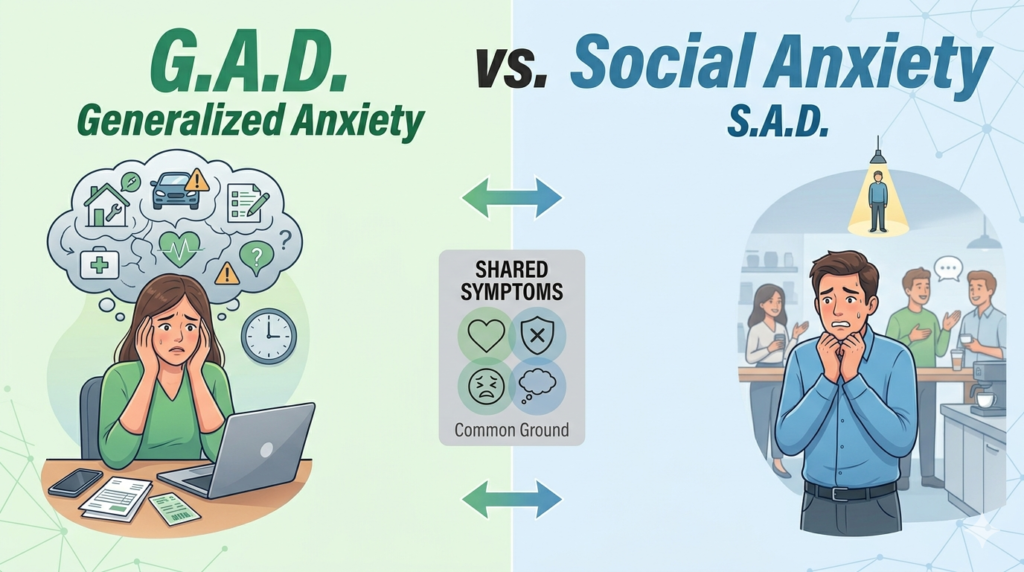
If you’re unsure whether your symptoms are related to generalized anxiety or social anxiety, read our detailed guide on understanding the difference between generalized anxiety and social anxiety disorders.
The Hidden Cost of Constant Achievement
Being productive all the time can look impressive from the outside.
Internally, however, the cost can be significant.
Research consistently shows that chronic stress can affect:
- Sleep quality
- Cardiovascular health
- Immune function
- Emotional resilience
- Relationship satisfaction
The problem isn’t ambition.
The problem is feeling like your value depends entirely on your performance.
How High-Functioning Anxiety Affects Work and Relationships
At Work
High-functioning anxiety may initially appear beneficial.
People often become:
- Organized
- Driven
- Reliable
- Detail-oriented
However, long-term anxiety can contribute to:
- Burnout
- Decision fatigue
- Imposter syndrome
- Difficulty delegating
- Reduced job satisfaction
In Relationships
Anxiety can also affect personal connections.
People may:
- Seek constant reassurance
- Avoid vulnerability
- Overanalyze interactions
- Fear rejection
- Struggle with boundaries
Healthy relationships require emotional openness, which anxiety sometimes makes difficult.
High-Functioning Anxiety Treatment Options
The good news is that anxiety is highly treatable.
Therapy
For many people, professional online anxiety therapy for chronic worry, perfectionism, and emotional stress can help identify unhealthy thought patterns, build healthier coping skills, and reduce anxiety symptoms over time.
Cognitive Behavioral Therapy (CBT)
CBT is widely recognized as one of the most effective treatments for anxiety disorders.
It focuses on identifying and restructuring unhelpful thought patterns.
Lifestyle Changes
Helpful strategies may include:
- Regular exercise
- Quality sleep
- Mindfulness practices
- Limiting caffeine
- Setting realistic expectations
- Learning healthy boundaries
Stress Management
Learning how to manage stress proactively can reduce the intensity of anxiety symptoms over time.
When to Seek Professional Support
You should consider seeking support if anxiety:
- Interferes with sleep
- Causes chronic stress
- Impacts relationships
- Creates emotional exhaustion
- Affects work performance
- Leads to physical symptoms
- Prevents you from enjoying life
You do not need to wait until you reach a breaking point.
Early support often leads to better outcomes.
Frequently Asked Questions
What is high-functioning anxiety?
High-functioning anxiety describes people who appear successful and capable while privately experiencing anxiety, worry, perfectionism, and chronic stress.
Is high-functioning anxiety a real diagnosis?
No. High-functioning anxiety is not an official medical diagnosis. However, the symptoms often overlap with recognized anxiety disorders.
What are the most common signs of high-functioning anxiety?
Common signs include overthinking, perfectionism, difficulty relaxing, people-pleasing, chronic worry, and physical symptoms of stress.
Can high-functioning anxiety lead to burnout?
Yes. Constant pressure, unrealistic expectations, and ongoing stress can increase the risk of emotional exhaustion and burnout.
How do you treat high-functioning anxiety?
Treatment may include therapy, Cognitive Behavioral Therapy (CBT), stress management techniques, lifestyle changes, and professional mental health support.
Conclusion
High-functioning anxiety often hides behind success.
From the outside, everything may appear under control. Internally, however, many high achievers are carrying an exhausting mental load filled with worry, perfectionism, and pressure.
The ability to perform well does not mean you are free from anxiety.
Recognizing the signs is the first step toward healthier coping strategies and better emotional well-being.
If you constantly feel overwhelmed despite appearing successful, remember that support is available. You don’t have to keep carrying the weight alone.