Finding the right therapist can feel overwhelming, especially when you are already dealing with stress, anxiety, depression, family concerns, relationship challenges, or a major life change.
Online therapy has made mental health care more accessible for many people. You no longer always need to travel to an office, sit in a waiting room, or limit yourself to providers near your home. With teletherapy, you can meet with a licensed mental health professional through secure video or phone sessions.
But access is only one part of the decision. The bigger question is: how do you choose the right online therapist for your needs?
The right therapist should be properly licensed, experienced with your concern, clear about privacy, and someone you feel comfortable speaking with. Therapy is personal, and the fit matters.
If you are new to virtual care, it may help to first read our guide on how online therapy and telehealth counseling work before your first session. You can also review the key differences between online therapy and in-person therapy if you are still deciding which format is better for you.

This guide explains how to choose an online therapist in a careful, informed, and practical way.
Quick Answer: How Do You Choose the Right Online Therapist?
To choose the right online therapist, start by checking that the therapist is licensed to provide care in the state where you are located. Then look at their experience with your concern, therapy approach, privacy practices, session format, cost, insurance options, and availability.
A good online therapist should explain their process clearly, respect your questions, protect your confidentiality, and help you understand whether online therapy is appropriate for your needs. The American Psychological Association notes that choosing a therapist is personal and that no single therapist is right for everyone.
The best therapist is not simply the one with the most credentials. It is the professional who is qualified, ethical, experienced with your concerns, and able to build a safe therapeutic relationship with you.
Why Choosing the Right Online Therapist Matters
Therapy works best when you feel safe enough to speak honestly. That does not mean therapy always feels easy. Some sessions may bring up difficult emotions. But you should feel respected, heard, and supported.
Choosing the wrong therapist can make therapy feel confusing or discouraging. Choosing the right therapist can help you feel more comfortable, more understood, and more willing to stay consistent.
A therapist may help with:
- Understanding emotions and behavior patterns
- Managing anxiety, depression, stress, or burnout
- Improving communication
- Supporting children or teens
- Working through relationship or family conflict
- Building coping skills
- Navigating grief, transitions, or major life changes
- Creating realistic treatment goals
The therapeutic relationship is one of the most important parts of care. This is why it is worth taking time to choose carefully.
Step 1: Make Sure the Therapist Is Licensed in Your State
Licensure is one of the first things to check when choosing an online therapist.
Even though therapy happens online, the therapist usually needs to be licensed or legally permitted to provide care in the state where you are physically located during the session. Telehealth licensing rules vary by profession and state, but state-based licensure remains a key part of legal and ethical care. Telehealth.HHS.gov explains that health care providers must meet state licensing requirements to legally practice in a state, and these requirements can include education, exams, background checks, license renewal, and continuing education.
When reviewing a therapist’s profile, look for credentials such as:
| Credential | Common Meaning |
|---|---|
| LCSW / LICSW | Licensed clinical social worker |
| LMFT | Licensed marriage and family therapist |
| LPC / LMHC | Licensed professional counselor or licensed mental health counselor |
| Psychologist / PhD / PsyD | Licensed psychologist |
| Psychiatrist / MD / DO | Medical doctor who can diagnose and prescribe medication |
| PMHNP | Psychiatric mental health nurse practitioner, often able to prescribe medication |
Credential names can vary by state. If you are unsure, ask the practice directly:
“Are you licensed to provide online therapy in my state?”
This is especially important if you live in one state but travel often, attend college elsewhere, or split your time between states.
Step 2: Look for Experience With Your Specific Concern
Not every therapist works with every issue. Some therapists focus on anxiety and depression. Others specialize in children, teens, couples, families, trauma, grief, parenting, or life transitions.
A therapist does not need to have the exact same life experience as you to help. But they should have training or clinical experience with the concern you want to address.
If You Need Help With Anxiety
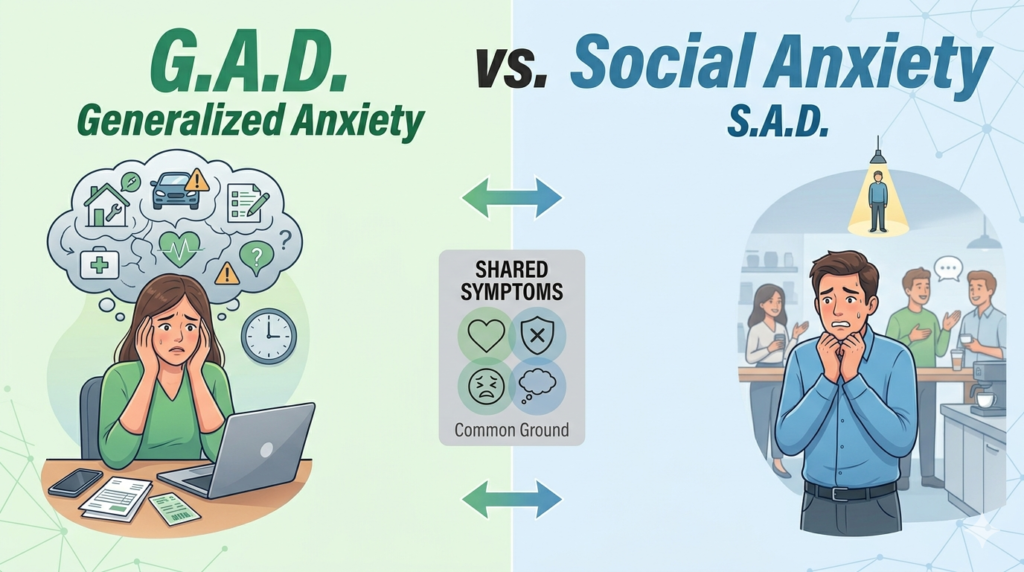
Look for a therapist who understands worry patterns, panic symptoms, avoidance, social anxiety, perfectionism, overthinking, and stress responses.
You may ask:
“Do you have experience working with anxiety or panic?”
“What therapy approaches do you use for anxiety?”
“How do you help clients build coping skills?”
If You Need Help With Depression
For depression, choose a therapist who understands low mood, loss of interest, motivation problems, sleep changes, negative thinking, emotional numbness, and daily functioning challenges.
You may ask:
“How do you support clients with depression?”
“Do you help with both emotional support and practical coping strategies?”
“How do you assess safety concerns when needed?”
If You Are Looking for Child or Teen Therapy
Children and teens often need a different approach than adults. For child therapy, parent involvement may be part of the process. For teen therapy, the therapist should understand privacy, family communication, school stress, peer relationships, identity development, and emotional regulation.
You may ask:
“How do you involve parents in therapy?”
“How do you protect a teen’s privacy while keeping parents appropriately informed?”
“What age groups do you work with most often?”
If You Need Couples or Family Therapy
Couples and family therapy are different from individual therapy. The therapist must be able to manage more than one person’s perspective, communication patterns, conflict, boundaries, and relationship dynamics.
You may ask:
“Do you have training or experience in couples or family therapy?”
“How do you structure sessions with more than one person?”
“How do you handle conflict during a session?”
Step 3: Understand the Therapist’s Therapy Approach
Therapists use different methods. Some therapy is structured and skill-based. Some is more insight-focused. Some is short-term and goal-focused, while other therapy may be longer-term.
Common therapy approaches include:
| Therapy Approach | What It May Focus On |
|---|---|
| Cognitive Behavioral Therapy | Thoughts, feelings, behaviors, coping skills |
| Dialectical Behavior Therapy Skills | Emotional regulation, distress tolerance, mindfulness, relationships |
| Family Systems Therapy | Family roles, communication, patterns, boundaries |
| Couples Therapy Approaches | Communication, conflict, trust, emotional connection |
| Play Therapy | Child expression, emotions, behavior, coping |
| Trauma-Informed Therapy | Safety, emotional regulation, trauma responses, healing at a safe pace |
You do not need to know every therapy method before starting. But it helps to ask the therapist how they usually work.
Good questions include:
“What is your therapy style?”
“Are sessions structured or more open-ended?”
“How do you set goals with clients?”
“What can I expect after the first few sessions?”
“How will we know if therapy is helping?”
The American Psychological Association recommends asking what kind of therapy a potential therapist provides and whether that approach fits your expectations.
Step 4: Check Whether Online Therapy Fits Your Needs
Online therapy is helpful for many people, but it is not the best fit for every person or every situation.
It may be a good fit if you have a private space, reliable internet, a device with camera and microphone, and symptoms that can be safely supported through telehealth.
Online therapy may work well for people dealing with:
- Anxiety
- Mild to moderate depression
- Stress
- Burnout
- Life transitions
- Parenting concerns
- Relationship stress
- Family communication issues
- Teen stress
- Emotional regulation challenges
Online therapy may not be enough if you are in crisis, at immediate risk of harm, unable to stay safe, experiencing severe symptoms that require close monitoring, or needing a higher level of care.
A qualified therapist should help determine whether teletherapy is appropriate for you. The American Psychological Association’s telepsychology guidance emphasizes professional competence, informed consent, confidentiality, security, record keeping, and legal requirements when therapy is provided through technology.
Step 5: Ask About Privacy and Confidentiality
Privacy matters in all therapy. It is especially important in online therapy because sessions happen through technology and from a space outside the therapist’s office.
Ask the therapist or practice:
What platform do you use for sessions?
Is the platform secure?
How is my information protected?
What happens if the video connection drops?
Can I attend from my car, workplace, or school?
What should I do if I do not have a private room?
You should also prepare your own private space. Use headphones if possible. Close extra apps. Avoid public Wi-Fi when you can. Let others in your home know you need uninterrupted time.
For children, teens, couples, and families, privacy rules may be more complex. Parents may need to understand what information is shared, what remains private, and when a therapist must speak up for safety reasons.
Confidentiality has legal and ethical limits. A therapist may need to act if there is risk of harm, abuse, neglect, or other safety concerns. A good therapist will explain these limits clearly before treatment begins.
Step 6: Consider Cost, Insurance, and Scheduling
Practical details matter. Even if a therapist seems like a good fit, therapy needs to be realistic for your schedule and budget.
Before starting, ask:
Do you accept my insurance?
What is the session fee?
Are there copays or deductibles?
Do you provide superbills for out-of-network reimbursement?
How long are sessions?
How often do sessions usually happen?
What is your cancellation policy?
Do you offer evening or weekend appointments?
How soon can I start?
If using insurance, contact your insurance company or check your benefits before your first session. Ask whether telehealth therapy is covered, whether the therapist is in network, and what your expected cost will be.
Cost should not be the only factor, but unclear pricing can create stress later. A professional practice should be able to explain fees and billing clearly.
Step 7: Pay Attention to Therapist Fit
Therapist fit is more than credentials. You should also notice how you feel during the first contact or first session.
You may have a good fit if the therapist:
- Listens without rushing you
- Explains things clearly
- Respects your questions
- Understands your goals
- Has experience with your concern
- Maintains professional boundaries
- Makes you feel safe enough to continue
- Is clear about confidentiality and treatment expectations
You may not feel fully comfortable in the first session, and that is normal. Therapy can feel vulnerable. But you should not feel judged, dismissed, pressured, or confused about the process.
It is okay to try a different therapist if the fit does not feel right. The APA notes that choosing a therapist is a personal decision and that no one therapist is right for everyone.
Questions to Ask Before Starting With an Online Therapist
Here are helpful questions to ask during a consultation or first session:
| Question | Why It Matters |
|---|---|
| Are you licensed in my state? | Confirms legal and professional eligibility |
| Do you work with my concern? | Helps match your needs to their experience |
| What age groups do you work with? | Important for child, teen, adult, or family therapy |
| What is your therapy approach? | Helps you understand the session style |
| How do you set goals? | Shows whether treatment is structured |
| What platform do you use? | Helps with privacy and technical preparation |
| How do you handle emergencies? | Important for safety planning |
| Do you accept insurance? | Helps avoid billing surprises |
| How often are sessions usually scheduled? | Helps you plan consistency |
| What should I expect in the first session? | Reduces anxiety before starting |
You do not need to ask every question at once. Choose the ones most important for your situation.
Red Flags to Watch For When Choosing a Therapist
Most therapists are ethical and professional, but it is still important to know what warning signs to look for.
Be cautious if a therapist:
- Cannot explain their license or credentials
- Refuses to discuss privacy or confidentiality
- Makes guaranteed promises like “I can cure you”
- Pressures you to continue without explaining treatment
- Dismisses your concerns
- Talks more about themselves than your needs
- Does not explain fees clearly
- Ignores safety concerns
- Provides advice that feels inappropriate or outside their role
- Does not have a plan for telehealth emergencies
Therapy should feel professional, safe, and respectful. If something feels wrong, you are allowed to ask questions or seek another provider.
Diagnosis and Treatment: What an Online Therapist Can Help With
An online therapist may help assess your concerns, understand symptoms, create treatment goals, and provide therapy. Depending on their license and state rules, some therapists may diagnose mental health conditions.
However, diagnosis is not always needed to start therapy. Many people begin therapy because they feel overwhelmed, anxious, sad, stuck, burned out, or unsure how to manage a situation.
Online therapy may support treatment for concerns such as:
- Anxiety
- Depression
- Stress
- Burnout
- Grief
- Relationship challenges
- Parenting stress
- Family conflict
- Child emotional concerns
- Teen mental health challenges
- Life transitions
Most therapists do not prescribe medication. Medication is usually handled by psychiatrists, psychiatric nurse practitioners, primary care clinicians, or other qualified medical providers, depending on state laws and clinical needs.
If medication or a higher level of care may be helpful, your therapist can discuss referral options.
Prevention: Why Choosing the Right Therapist Early Matters
Therapy is not only for crisis moments. Choosing the right therapist early can help you address stress, anxiety, family tension, relationship problems, or emotional patterns before they become more difficult to manage.
Early support may help you:
- Build coping skills
- Improve communication
- Understand emotional triggers
- Create healthier boundaries
- Support a struggling child or teen
- Reduce stress before burnout worsens
- Learn how to respond instead of react
- Strengthen family or relationship patterns
Therapy cannot prevent every challenge, but it can help you build tools and support before problems become heavier.
When to See a Mental Health Professional
You may want to speak with a mental health professional if your emotions, thoughts, relationships, work, school, parenting, or daily life are being affected.
Consider reaching out if you notice:
- Ongoing anxiety, sadness, anger, or emotional numbness
- Panic attacks or intense worry
- Stress that feels hard to manage
- Loss of interest in things you used to enjoy
- Sleep, appetite, or energy changes
- Repeated relationship conflict
- Family communication problems
- A child or teen struggling with mood, behavior, or school stress
- Feeling stuck during a major life change
- Difficulty coping with grief or loss
If you or someone else is in immediate danger, at risk of self-harm, thinking about suicide, or unable to stay safe, call emergency services or go to the nearest emergency room. In the United States, the 988 Suicide & Crisis Lifeline provides crisis support through call, text, or chat.
FAQs
How do I choose the right online therapist?
Choose an online therapist by checking their license, state availability, experience with your concern, therapy approach, privacy practices, cost, scheduling options, and how comfortable you feel during the first conversation.
What should I look for in an online therapist?
Look for proper licensure, relevant experience, clear communication, ethical privacy practices, transparent fees, and a therapy style that fits your goals.
Does my online therapist need to be licensed in my state?
In most cases, yes. Your therapist generally needs to be licensed or legally permitted to provide care in the state where you are located during the session. State rules can vary, so always confirm before starting.
How do I know if a therapist is a good fit?
A therapist may be a good fit if you feel respected, heard, and safe enough to speak honestly. They should explain their process, answer questions clearly, and have experience with your concern.
What questions should I ask an online therapist before starting?
Ask about licensure, experience, therapy approach, session structure, privacy, fees, insurance, scheduling, cancellation policies, and what to expect in the first session.
Can an online therapist diagnose me?
Some licensed mental health professionals can diagnose mental health conditions through telehealth, depending on their license, state rules, and your clinical needs. If another type of evaluation is needed, they may refer you to a qualified provider.
Can an online therapist prescribe medication?
Most therapists do not prescribe medication. Medication is usually prescribed by psychiatrists, psychiatric nurse practitioners, or other qualified medical providers.
What if I do not like my therapist after the first session?
It is okay to look for another therapist if the fit does not feel right. Therapy is personal, and not every therapist will be the right match for every client.
Key Takeaway
Choosing the right online therapist means looking beyond convenience. A qualified therapist should be licensed in your state, experienced with your concern, clear about privacy, transparent about cost, and someone you feel safe speaking with.
The right fit can make therapy feel more supportive, focused, and consistent. If you are unsure, start with a consultation and ask questions before committing.
Disclaimer
This article is for educational purposes only. It is not a substitute for professional mental health care, diagnosis, treatment, or emergency support. If you are experiencing a mental health crisis, suicidal thoughts, thoughts of self-harm, or immediate danger, call emergency services or contact the 988 Suicide & Crisis Lifeline in the United States.
References
American Psychological Association. How to choose a psychologist.
American Psychological Association. How do I find a good therapist?
American Psychological Association. Guidelines for the Practice of Telepsychology.
Telehealth.HHS.gov. Licensing across state lines.
SAMHSA. 988 Suicide & Crisis Lifeline.